Congress shall make no law respecting an establishment of religion, or prohibiting the free exercise thereof; or abridging the freedom of speech, or of the press; or the right of the people peaceably to assemble, and to petition the Government for a redress of grievances.
-- First Amendment of the U.S. Constitution
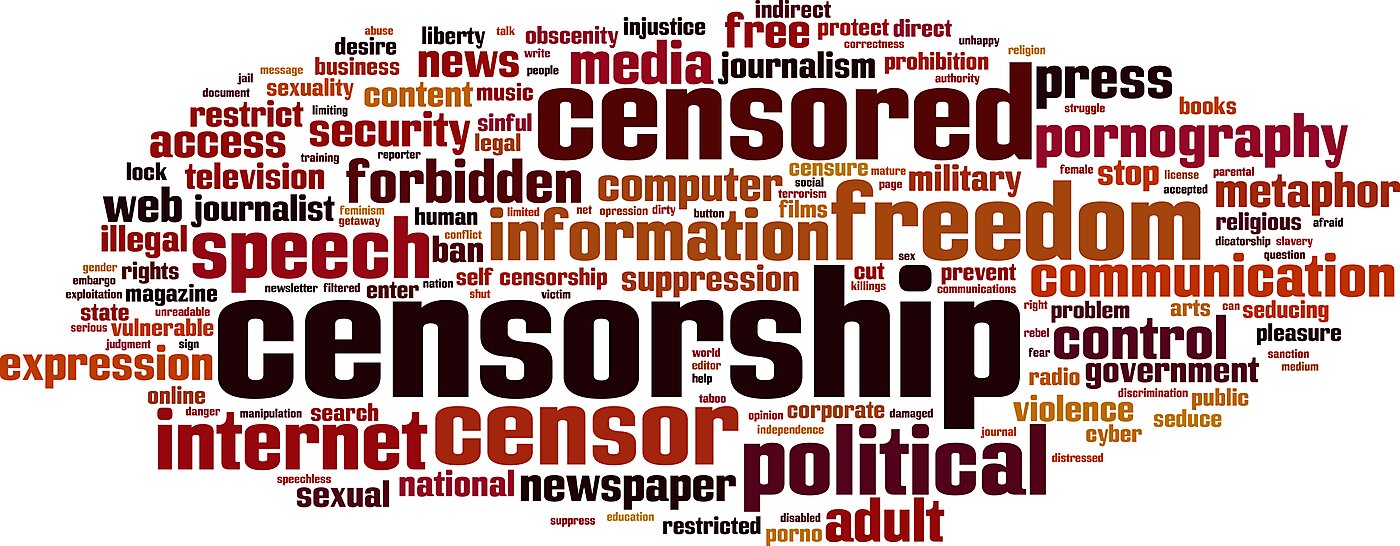
The current administration has instituted a series of measures that directly or indirectly constitute forms of censorship, chilling effects, and restrictions on First Amendment rights. These actions impact the media, education, museums, and other public and private organizations. The threat to restrict federal funding to education, to control educational content at all levels, to threaten the legal basis for media, and to censure specific media content with which they disagree. In other words, you have to get prior approval to write, publish, or distribute any type of public information. They’re not censoring private letters yet, but it may come to that.
These actions have been challenged by lawsuits, and Courts frequently intervened with preliminary injunctions or blocking executive orders that indicated their constitutional concerns. These actions have produced a strong a partisan divide over the administration’s policies.
The techniques have not been limited to requiring prior approval or withdrawing published content. Sometime they are more subtle, just as requiring universities to change policies or recruiting tactics under threat of losing federal grants. Law firms have been challenged in they may lose government contracts if they don’t toe the Republican Party line (prior restraint). Some organizations have not stood up to the challenges and have capitulated to the President’s personal demands. Harvard University is perhaps the most striking example of a high-profile feud between the President and a university’s administration. He has demanded that they respond to his specific detailed instructions (regulations) on university written publications, policies, and procedures; in spite of the fact that it is a private institution. He uses the threat to withdraw public funds unless they comply.
The underlying issue is the role of government in regulating information. In the 18th Century, communication either was in person or in print. Now we have many forms of information as expanded by the Internet, which supposedly is a free market. Information does not have to be a formal publication. We distribute information in many ways. Regulations of how the economy works, such as how business communicates with its employees and customers. In addition to printed material, we have visual and auditory media. We are no longer describing just about what comes out of your mouth or what you write.
The Trump administration's approach to free speech carries profound implications for democratic institutions, the vitality of the marketplace of ideas, and the fundamental role of government in a free society. The modes of communication are too complex now. If the State tries to control all flow of information, then by definition it is limiting free “speech.” Such strategies fundamentally alter the relationship between government and the governed.
+Extracted from “The Extent of Censorship Imposed by the Trump Administration in its Second Term: A Comprehensive Analysis” A research paper by Gemini, August 14, 2025, 20 pages
 This email address is being protected from spambots. You need JavaScript enabled to view it.