 Norman Rockwell's "Freedom from Want"
Thanksgiving hasn’t been as commercialized as Halloween or Christmas. It doesn’t have a retail market. The day still primarily is reserved as a family gathering around a big meal of turkey and the fixings. Of course, the meals vary by region, and the family dinners are not always harmonious. It has its myths, like all our holidays, but I think it still focuses on one aspect of life that often is ignored. Taking time to express gratitude, in more than just a few perfunctory prayers or in a journal, has been increasingly rare. My paternal grandfather always celebrated July 4th with gratitude for a new life as an immigrant. The recognition of the day to him had little to do with the event long ago.
As part of my mindful meditation practice, one step is to journal three things for which I’m grateful. It can be expressed in a variety of ways so that it doesn’t become perfunctory. I’ll admit that it has been a great fault of mine that I did not always express gratitude. In fact, for many years I was an ingrate. I had to grow outside of myself to experience the benefits of gratitude. It’s a lot more than just “Thank You.” We expect that as a matter of common courtesy. We’re supposed to reciprocate for a gift with a card, or at least a phone call. Emails don’t count.

After all the hype preceding the film’s release last weekend, the show was a disappointment. “Bros” was a message movie and not a comedy. The protagonist was a jerk and an egotist, and his rants were boring. He was more than an LGBTQ+ activist, he was rude and aggressive. After it bombed at the box office, he made all kinds of excuses and blamed everyone but himself.
Some compared him with another New York Jew and tagged him as the “gay Woody Allen.” Woody had a whiny voice and big sad eyes, but he could be funny. Billy Eichner simply was obnoxious. I missed the inside joke about the Hallmark movies. I found out later that his gorgeous co-star had starred in several Hallmark movies. He would be the perfect typecast for the romantic hero. Here he was played for laughs because of his muscular physique. He came across as a sweetheart. Neither of the leads seemed like real people; they were more like gay stereotypes. If Billy was out to educate the public about LGBTQ+ issues, he failed. Even the gay media panned him.
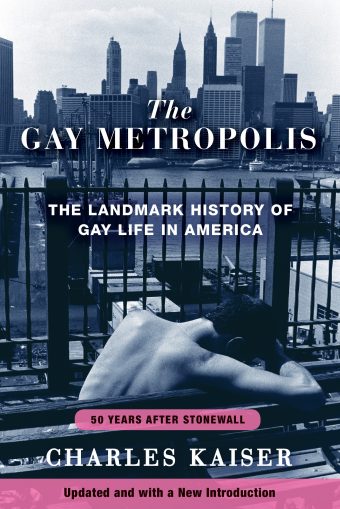 The Gay Metropolis by Charles Kaiser
The Gay Metropolis by Charles Kaiser
The original edition came out in 1997. The updated version came out in 2019 and covers 80 years of gay history in America, primarily New York City. Anyone and everyone in the city during that period who was gay gets at least a couple of paragraphs in the book. Of course, the rich and famous get a lot more than that.
It starts with WWII. “It gave women, blacks, gays, and lesbians vital new paths toward self-esteem, by becoming everything from factory riveters to fighter pilots.... The United States Army acted as a great, secret unwitting agent of gay liberation by creating the largest concentration of homosexuals inside a single institution in American history. In the postwar period, New York City became the literal gay metropolis for hundreds of thousands of immigrants from within and without the United States: the place they chose to learn how to live openly, honestly, and without shame.”