A Century of Change Compressed into a few days
Our recent trip to West Virginia and Pittsburgh, PA was a voyage in time as well as a cursory view of the scenic attractions. We started at the Canyon Rim Visitor Center at the overlook of the US Hwy 19 bridge across the New River Gorge National River Park in West Virginia. The bridge over the New River Gorge was built 30+ years ago and spans almost 900 feet above the river. It is closed each year for an annual festival that draws thousands to the area.
The center shows a short film and has displays tracing the history of 19th Century coal mining operations and towns along the New River. Coal at that time was the primary source of heating fuel and industrial energy. Coke was shipped by rail to Pittsburgh to help make steel, and coal was shipped down river to eventually wind up in New Orleans for shipment abroad.
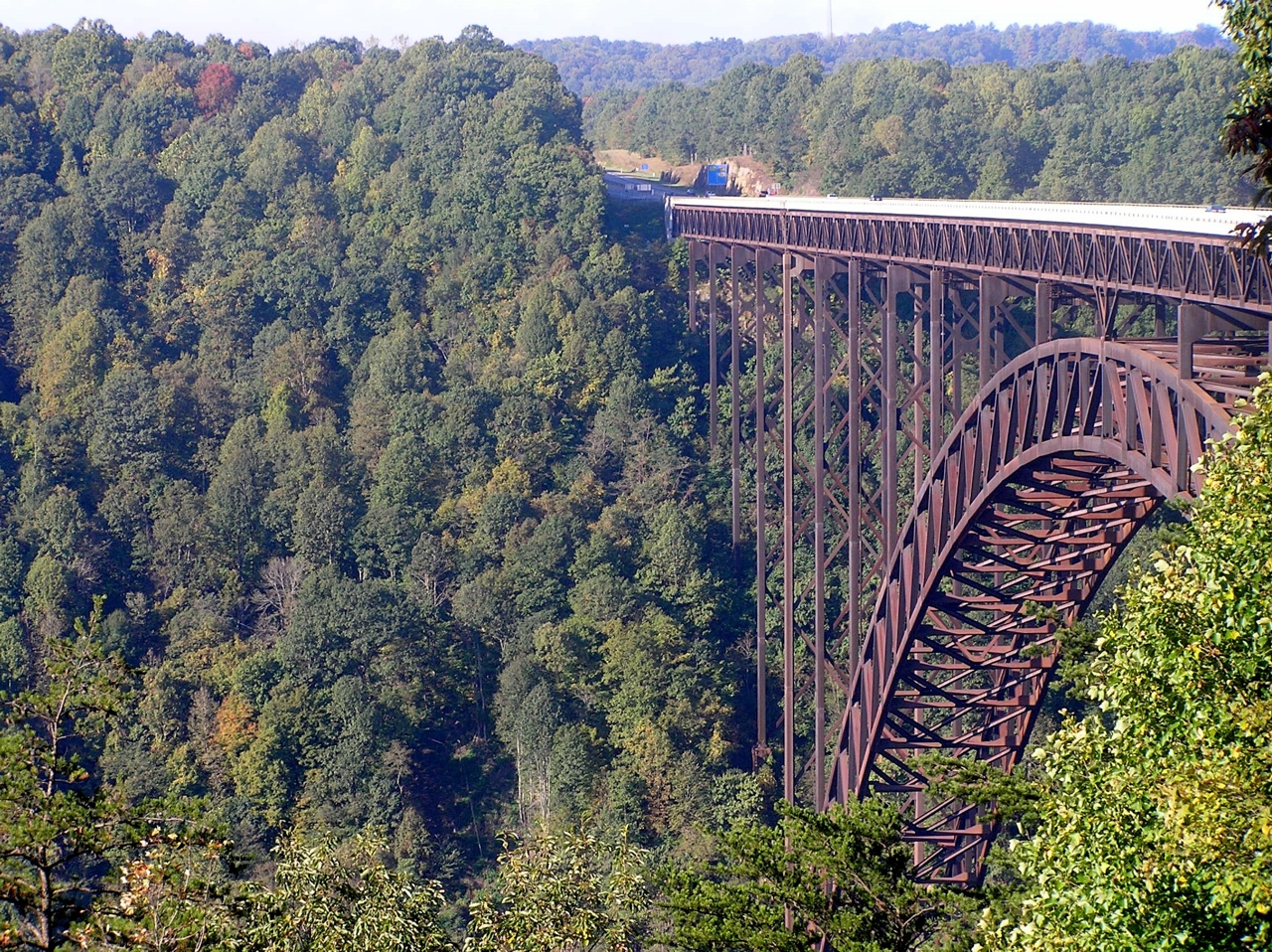 New River Gorge Bridge in West Virginia is 900 ft. above the river. © John Suddath
The coal mines have almost disappeared into the 2nd-growth forest, and the towns along the river only have small train stations served by Amtrak left to mark where they were 100 years ago. The coal mines shut down in the 1950’s, and the steel mills along the rivers in Pittsburgh shut down in the 1980’s. They have been replaced with white-water rafting on the New River and by giant sports arenas and malls along the three rivers in Pittsburgh: the Monongahela, Allegheny, and Ohio. Tourism, recreation, sports, and history are the new economies of the area, but pockets of poverty still abound.
If you wander off the wonderful scenic vistas of the interstate highways in West Virginia, you quickly drop off into little mountain coves with decaying homes and pick-up trucks in the yards. The suburb of Pittsburgh called Wilkinsburg hasn’t shared in the new prosperity and is filled with vacant businesses and houses. The twin cities of Clarksburg and Bridgeport WV are joined by a giant shopping mall that has been carved off the top of a mountain adjacent to I-79 that seems to feed off the tourism that has come to the area to replace the old mines and mills.
The beautiful highways in West Virginia truly provide spectacular views of the mountains, but the overlooks are limited so there aren’t a lot of places to stop to admire the beauty. The state visitor centers were all closed for renovations on our trip, and they weren’t placed in particularly scenic spots.
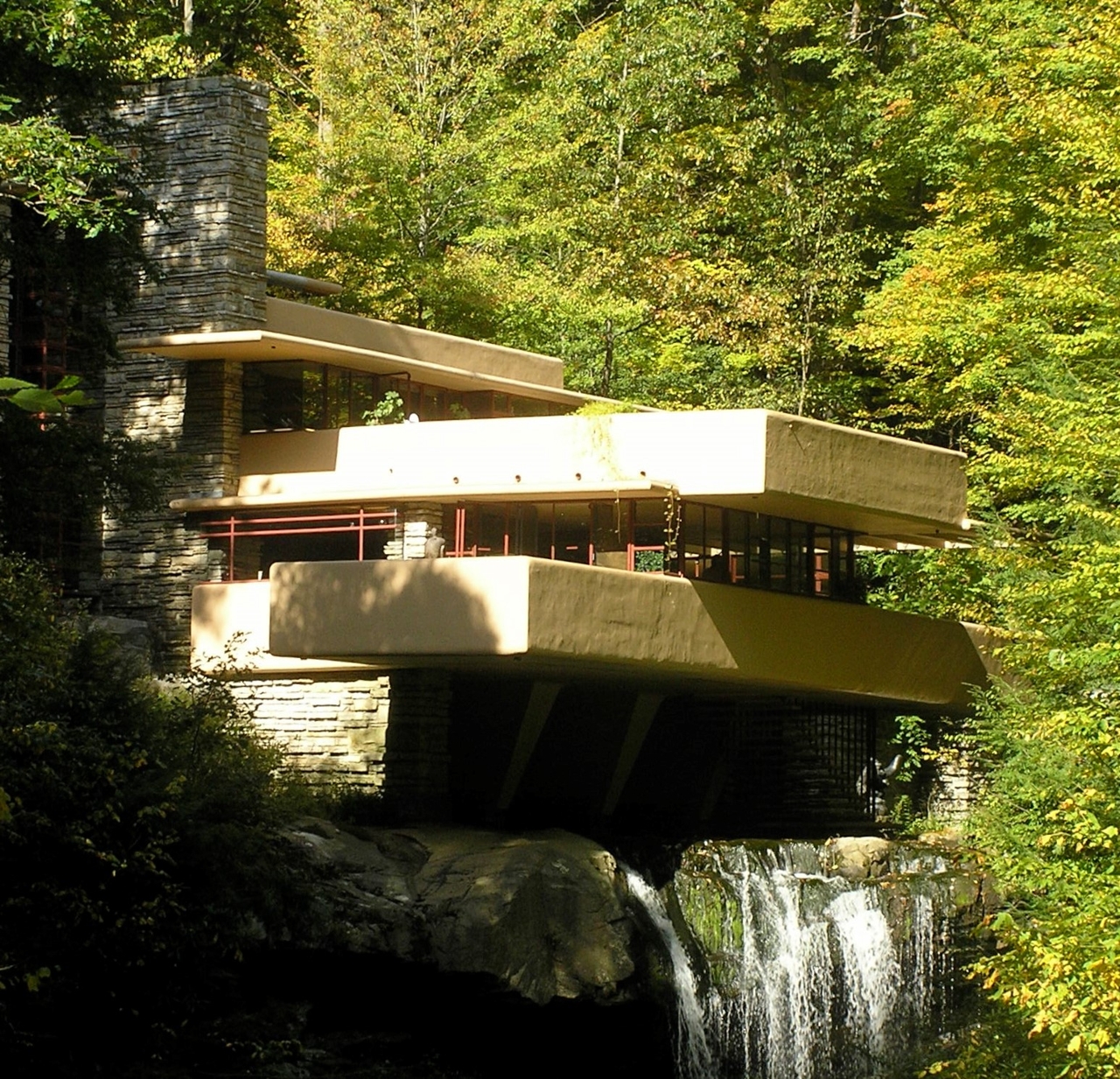 Frank Lloyd Wright’s Fallingwater is an architectural landmark. © John Suddath
The real purpose of this trip was an extended tour of Frank Lloyd Wright’s showplace at Fallingwater, out in the country southeast of Pittsburgh. The vacation home of the Edgar J. Kaufman family from 1937 to 1963, it was given to the Western Pennsylvania Conservancy, who opened it to the public. The Kauffman’s owned a large department store in Pittsburgh but loved the outdoors and first came to Bear Run to hike, picnic and escape the coal smoke of the city. The son was a student to Wright who encouraged his father to hire the architect. The five cantilevered decks overlooking a waterfall are the most unique feature of the house that has been preserved intact including furnishings. The foundation conserves and operates the facility that also includes a cafe and bookstore. Because of its remote location, a trip usually requires a full day.
Pittsburgh has enjoyed a renaissance in recent years even as the steel mills closed down. West Pittsburgh has a new science museum, stadium for the Steelers, ballpark for the Pirates, and a museum of art by local boy made good Andy Warhol.
The number of skyscrapers belies the number of Fortune 500 corporations that are headquartered in this medium-sized city of fewer than 400,000 people. We saw both the old and the new starting with the former residence of industrialist Henry Clay Frick who later became an art collector. He filled his home with magnificent art and later built a museum to house part of the collection as well as fill another mansion in New York.
The Carnegies, Mellons, and Fricks all became millionaires from the steel and railroads in the 19th Century, and remnants of their largess still abound in the area’s museums and universities. The area known as Oakland contains the University of Pittsburgh and its Cathedral of Learning and Carnegie-Mellon University. The city is surrounded by dozens of small communities that feed commuters into the downtown business and cultural district. We stayed in one of the suburbs and fought the traffic and construction on the Pennsylvania Turnpike and I-376 and tunnel traffic to get downtown. Pennsylvania must have received some stimulus money, because highway construction was everywhere both in the city and surrounding areas.
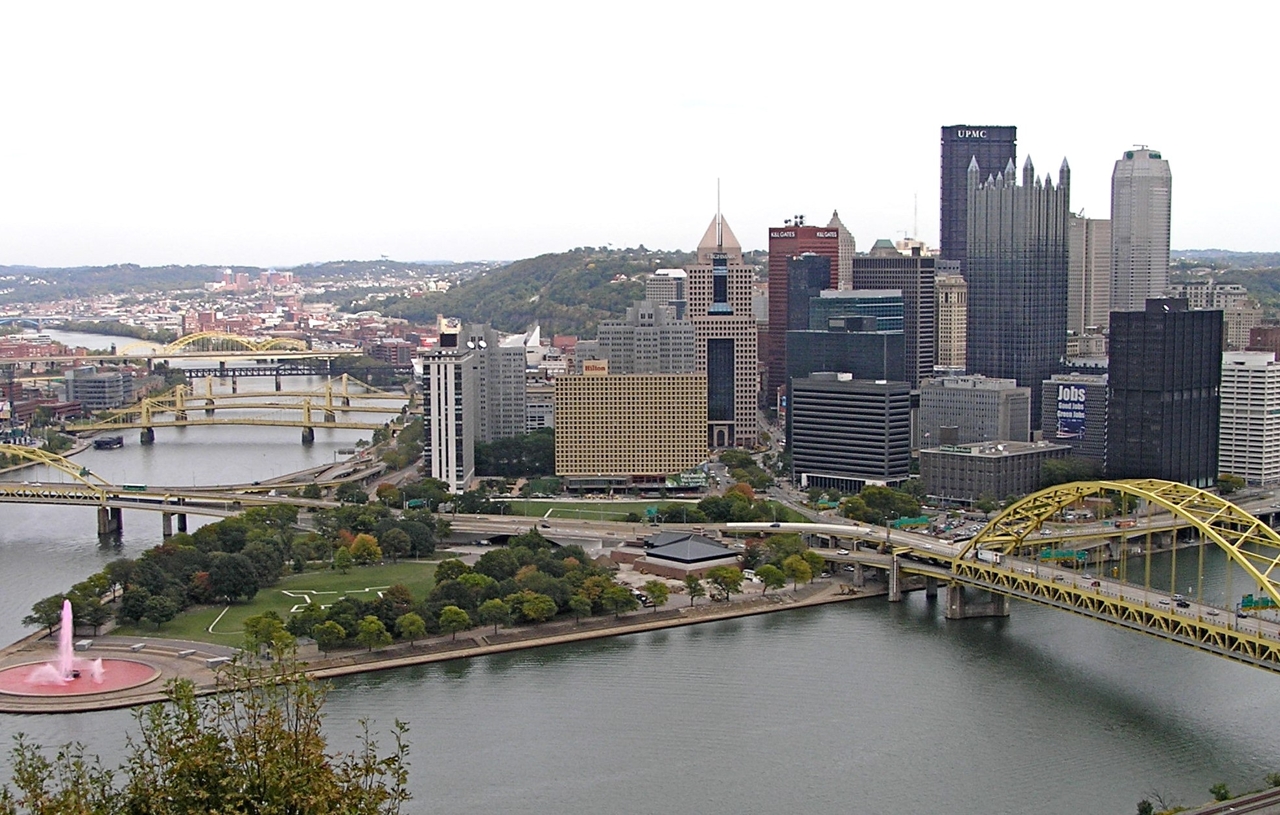 View of downtown Pittsburgh shows new developments. © John Suddath
A trip up the 1877 Duquesne Incline at Station Square is a good way to get an overview of the city -- literally. If you’re not familiar with the area or uncomfortable driving in heavy traffic, the bus tours across the street are recommended and there is free parking for the incline. Frequent city bus service is available between downtown and Oakland; light rail service is available only between downtown and south Pittsburgh. Station Square also includes a shopping mall, 20 restaurants, a courtyard with lighted fountains, a hotel, parking garage, and pier for the tour boats (in season).
We missed the Phipps Conservatory, the site of the recent G-20 meeting and demonstrations. Out of the 2-dozen+ attractions listed in the AAA tour book, we only saw a handful because we were only there for two days. We stayed in the suburbs to save money, but that eliminated the opportunities to sample any nightlife or cultural events downtown. A couple of tickets to the opera, ballet, symphony or theater could easily have doubled our limited budget. We splurged on several cultural events on a visit to Philadelphia a few years ago, and we decided to skip them in Pittsburgh even though we missed a lot of things we really would have enjoyed.
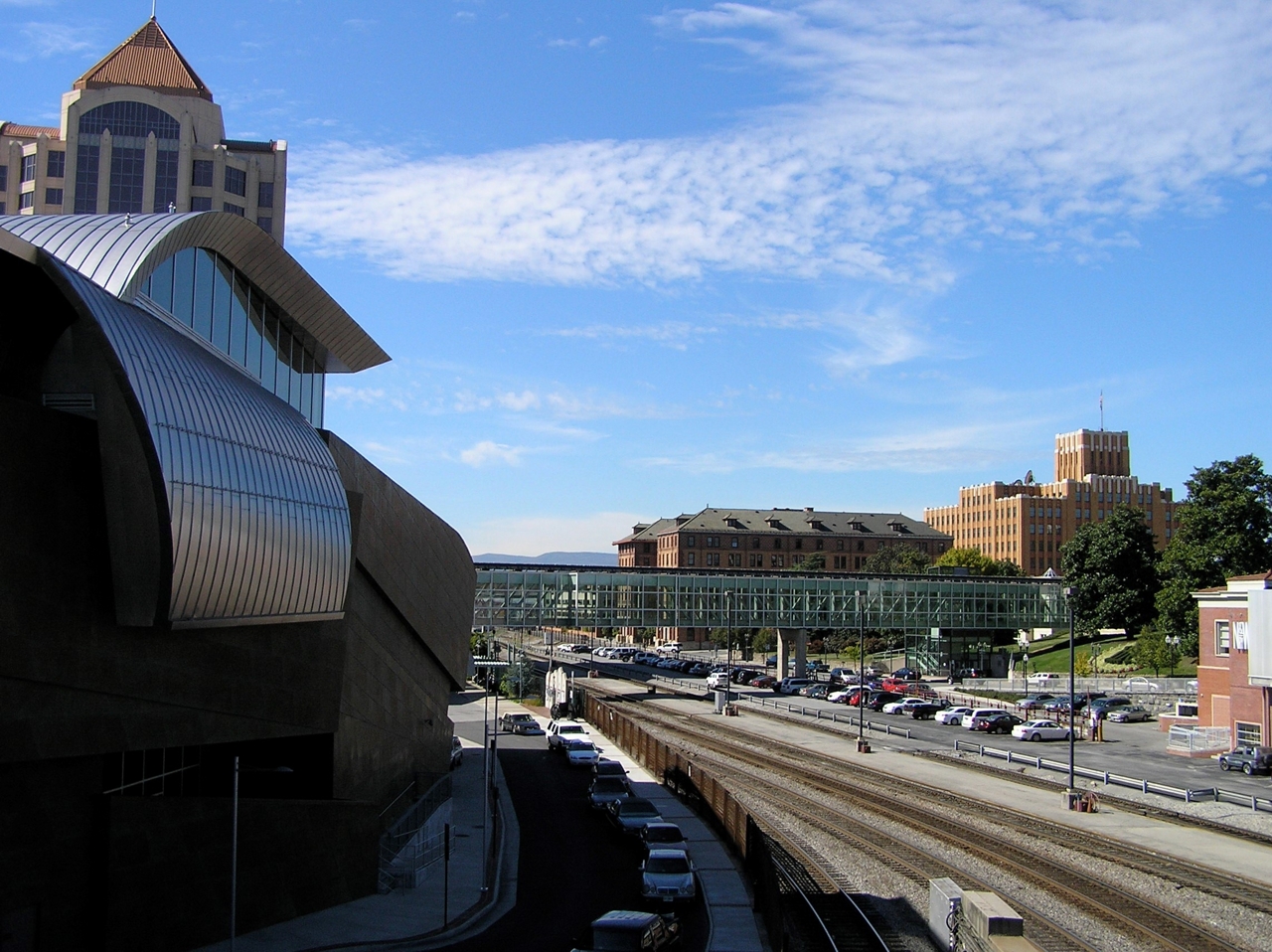 Taubman Museum of Art in Roanoke displays a modern design © John Suddath
On the return trip home, we stopped at another old railroad town that has enjoyed a downtown Renaissance — Roanoke, VA. The headquarters of the Norfolk & Western Railroad (now the Norfolk & Southern), the city is still focused on the railroad. On the north side of the tracks is the elegant Hotel Roanoke, and on the south side is the new Taubman Museum of Art that just opened last year. No visit is complete without a trip up to the park at the top of Mill Mtn. overlooking the city to view the sunset.
This is the kind of trip where you definitely need a GPS even if you have maps, printed guides, and web sites because of the complicated travel directions. Don’t rely solely on your GPS. A printed map can provide a good orientation as well as confirm specific locations when the GPS makes an occasional error. I even had to call for directions to the Duquesne Incline because road construction and large buildings kept making us miss the entry to the parking lot that was not marked. We had several iPhone applications including TripIt, Mapquest, Zagat, AroundMe, Where, and AAA Discounts, but we relied on local advice for places to eat. Generally for lunch we grabbed a quick bite at a fast food outlet and had our big meal in the evening when we had more time to relax and enjoy it.
Traveling from Raleigh, North Carolina over the interstates and spanning 1,200 miles over six days and five nights, we successfully completed a budget tour of the scenic highlands for only $500 each for the two of us. We couldn’t get even a plane ticket to Europe for that amount now so we’re skipping Europe for a few seasons and touring the US.
 This email address is being protected from spambots. You need JavaScript enabled to view it.