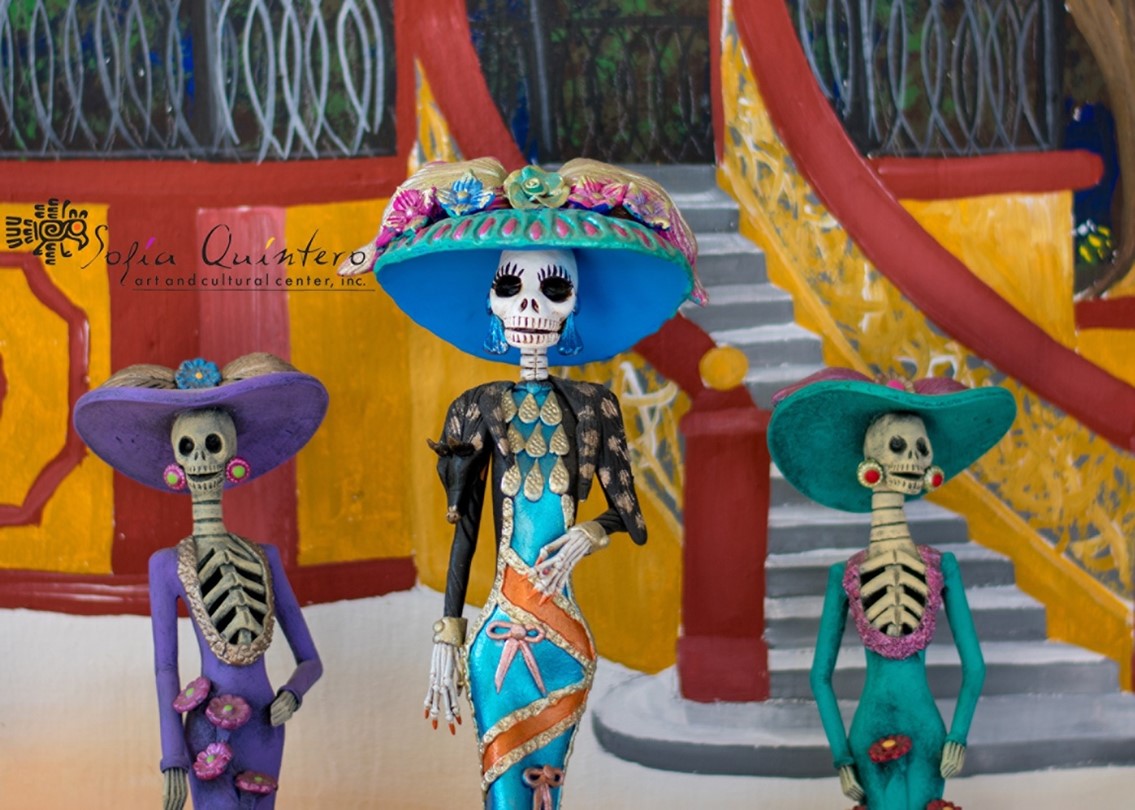
 The Day of the Dead
The commercial development of Halloween has caused it to dominate the Christian holidays. The three days - October 31 (All Hallows’ Eve, Halloween), November 1 (All Saints’ Day), and November 2 (All Souls’ Day) were special Holy Days in the Roman Catholic Church.
The Day of the Dead is a further complication of these holidays. It traces its origins back to Pre-Columbian Times, and it has been adopted in Latin American Countries as a blended holiday. In these countries, the emphasis is on symbols of death, such as skulls, skeletons, etc.
In the early days, Christians honored the martyrs, which eventually broadened to include all the dead. In modern times, some Protestant Churches also celebrate All Saints Day. Halloween is a contraction of “All Hallows Eve” and has become primarily a secular celebration even though it is not a state holiday or church holy day. It fills in the gap between July 4th and Thanksgiving, when retailers look for an excuse to have something to sell.
Adults like to take the occasion to dress up in wild costumes and party. Until recent times, children were taken around to neighborhood homes to collect “trick or treats.” The dangers of some sociopaths have reduced the popularity for children.
So why do we celebrate the morbid idea of the dead? We have Memorial Day (a state holiday) that celebrates military service personnel. The broader theme is simply to celebrate those who have gone before and what they have contributed to society. Family reunions are not as popular as they used to be as families were scattered all over the country. We don’t honor family heritage like we use to do. Genealogy used to be very popular.
On Christmas Day and Easter, my parents used to take flowers to the cemetery, and I couldn’t understand the connection. In an era in which we are focused so much on looking forward to the technologies of the future, it is refreshing to take time and to recall our heritage.
 This email address is being protected from spambots. You need JavaScript enabled to view it.