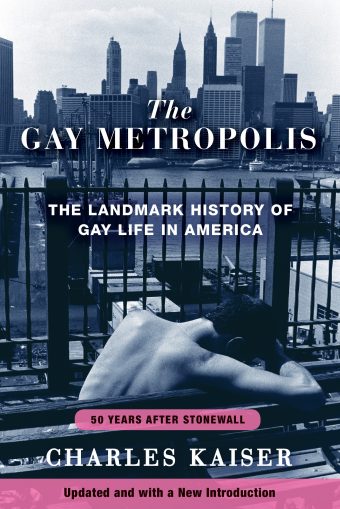
 The Gay Metropolis by Charles Kaiser
The Gay Metropolis by Charles Kaiser
The original edition came out in 1997. The updated version came out in 2019 and covers 80 years of gay history in America, primarily New York City. Anyone and everyone in the city during that period who was gay gets at least a couple of paragraphs in the book. Of course, the rich and famous get a lot more than that.
It starts with WWII. “It gave women, blacks, gays, and lesbians vital new paths toward self-esteem, by becoming everything from factory riveters to fighter pilots.... The United States Army acted as a great, secret unwitting agent of gay liberation by creating the largest concentration of homosexuals inside a single institution in American history. In the postwar period, New York City became the literal gay metropolis for hundreds of thousands of immigrants from within and without the United States: the place they chose to learn how to live openly, honestly, and without shame.”
The book is a long series of stories of many individuals and their unique experiences. Of course, the situations change over the decades. “No other group has ever transformed its status more rapidly or more dramatically than lesbians and gay men.” There were too many good stories go even pick out a few. The book includes those who are well known to be gay as well as a lot of obscure or famous people who remained closeted in their lifetimes. Up until the 90’s, the primary distinction among the gays and lesbians was not color. Your life depended upon whether you were rich or not. That not only determined your lifestyle but also whether you could buy your way out of a scrape or not.
Perhaps the greatest condemnation in the book is about the fact that for decades psychologists and psychiatrists called being gay a disorder and a mental illness that required treatment or a cure. Although Freud never claimed that it was a mental illness, he never supported the idea that we were just a minority of the population and not deviates.
The evolution of the LGBT community (Kaiser doesn’t use that acronym) fits in the context of the times and how American society was changing. He doesn’t address gender identity or transgender issues. Probably because they have only come recently to the forefront even within the LGBT community. The sexual revolution of the 60’s applied to both gay and straights. The most reluctant to change organizations were (and still are) mainline religious organizations. The community was slow to create its own media and thus was invisible for many decades outside New York and San Francisco. The mainstream media was biased in its coverage of the community and condemned it. That included print, television, and movies.
Solutions to AIDS, gays in the military, end of the sodomy laws, same-sex marriage, and gays & lesbians in politics really didn’t occur until the 21st Century. Then the changes seem to come quickly either through court opinions or public opinion. Of course, then we got the backlash with Trump and the right-wingers who chose to demonize the LGBT community for political gain. That merely unleased decades of bigotry that had been suppressed in the gains of civil rights.
Kaiser’s book is not a political tome. It reads more like a gossipy tale of secret liaisons and the foibles of the famous. It is entertaining while also covering the major issues with which the community has had to deal. We have come a long way, but we still have a long way to go.
 This email address is being protected from spambots. You need JavaScript enabled to view it.